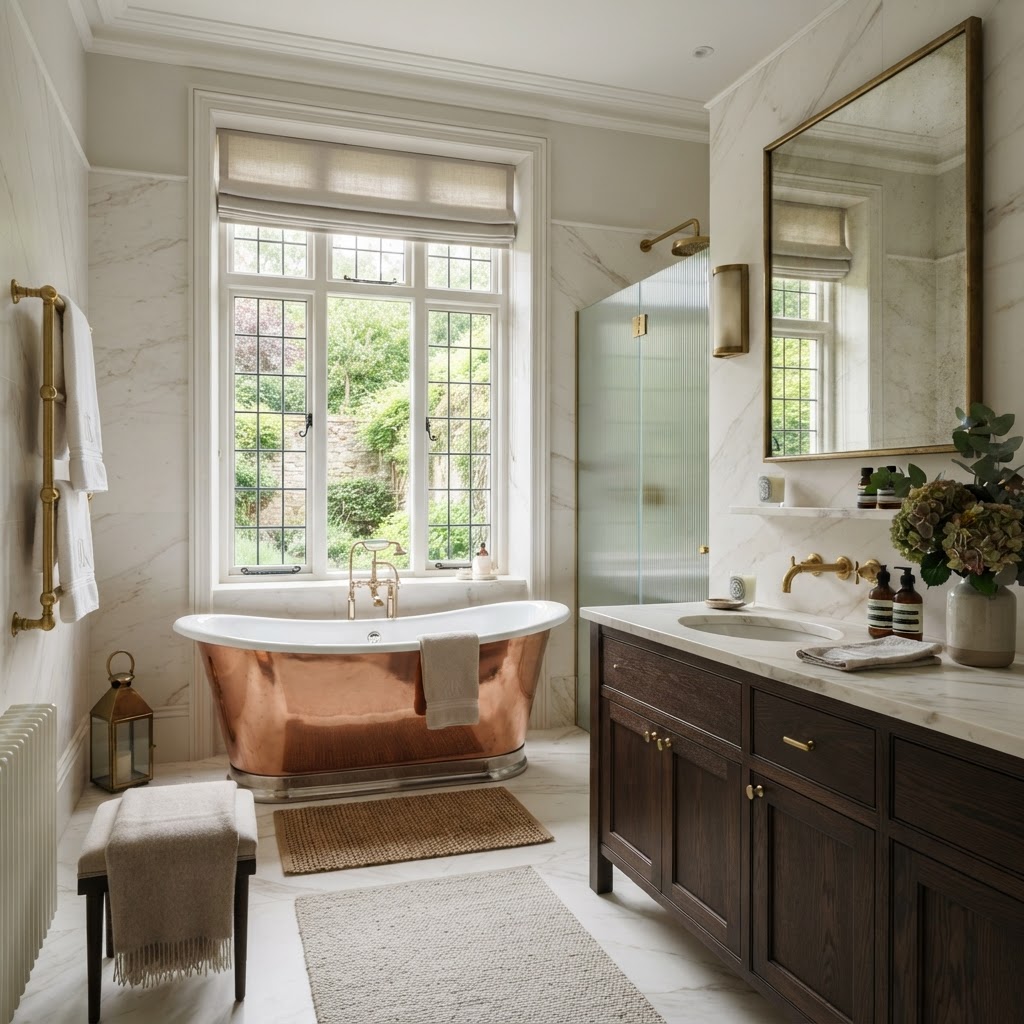
The Showering Revolution: Why the Choice Has Never Mattered More
There is a quiet revolution happening in the bathrooms of Britain's most discerning homes. The humble shower cubicle — once an afterthought tucked beside a family bath — has evolved into one of the most architecturally expressive spaces in the entire house. Today, homeowners across Gloucestershire are investing seriously in their shower experience, and the question we are asked most frequently at Dajon Interiors is this: should I choose a wet room or a walk-in shower?
It is a deceptively nuanced question. Both options share a commitment to open, frameless, spa-inspired design. Both speak the language of luxury. And yet they are fundamentally different in their construction, their spatial requirements, and the lifestyle they serve. Getting the decision right can transform a bathroom into a daily ritual of genuine pleasure. Getting it wrong can result in a beautiful space that simply does not function as well as it should.
In this guide, we draw on the expertise of our design team at Dajon Interiors — Gloucestershire's leading bespoke bathroom showroom — to help you understand the differences, explore the possibilities, and make a confident, informed choice for your home.
Understanding the Difference: Wet Rooms and Walk-In Showers Defined
Before we explore the merits of each, it is worth establishing precise definitions, because the two terms are used interchangeably — and incorrectly — with surprising frequency, even within the design industry.
What Is a Wet Room?
A wet room is a fully waterproofed, open-plan shower space in which the entire floor — and often the walls — are tanked and tiled to a continuous drain. There is no shower tray, no threshold, and no enclosure of any kind. The shower simply exists as a zone within the room, delineated by design rather than physical barriers. Water is managed entirely through gradient and drainage. The result is a seamlessly fluid space that blurs the boundary between shower and bathroom in the most elegant possible way.
What Is a Walk-In Shower?
A walk-in shower, by contrast, retains a low-profile shower tray — often a slim stone resin or tileable tray — and typically features one or two fixed glass panels to contain water whilst maintaining an open, accessible feel. It offers the aesthetic openness of a wet room with a more straightforward installation and, crucially, more reliable water containment. For many homeowners, it represents the ideal balance between visual luxury and practical performance.
The Case for a Wet Room: Pure Architecture, Uncompromised
There is an undeniable purity to a well-executed wet room. When every surface flows continuously from floor to wall, when there is no tray edge to step over and no frame to interrupt the eye, the result is something that feels closer to architecture than interior design. Wet rooms are particularly powerful in bathrooms where the ambition is total immersion — spaces designed to feel like a private wellness retreat rather than simply a room in which one washes.
From a design perspective, wet rooms open up remarkable possibilities. Large-format porcelain tiles — particularly book-matched slabs in marble effect or natural stone — come into their own in a fully tanked wet room, where the absence of joins and thresholds allows the material to speak without interruption. Rainfall ceiling showerheads become truly theatrical when positioned above an open tiled floor. And for bathrooms with underfloor heating, the continuity of surface means warmth radiates evenly and beautifully underfoot.
Wet rooms are also the gold standard for accessible design. With no threshold whatsoever, they are the preferred choice for homeowners thinking about long-term usability, or for those creating bathrooms that need to accommodate all members of a household with ease and dignity.
The Challenges to Consider
Wet rooms demand exceptional installation standards. The tanking process — the application of a waterproof membrane across floors and walls — must be executed with absolute precision. Any compromise here risks water ingress over time, which can cause significant structural damage. Drainage positioning is also critical; the floor gradient must be carefully calculated to ensure water travels efficiently to the drain without creating pooling elsewhere in the room.
They also tend to require a larger footprint to function well. In a very compact bathroom, a wet room can make the entire space feel damp and cold; the shower zone needs sufficient separation from the rest of the room to allow condensation to settle without affecting mirrors, storage, and adjacent surfaces.
The Case for a Walk-In Shower: Elegance Without Compromise
The finest walk-in shower enclosures available today are, quite simply, magnificent objects. Frameless toughened glass panels in 10mm or 12mm thickness, supported by discreet wall-fixed hardware in brushed brass, polished chrome, or matte black, offer a visual lightness that belies their structural solidity. Stone resin trays in slate, quartz, or terrazzo-effect finishes sit flush with surrounding floor tiles to create a near-seamless transition. The effect, in the right hands, is indistinguishable from a wet room — with considerably greater design flexibility and easier maintenance.
Walk-in showers also lend themselves beautifully to feature design moments. A niche carved into the wall, backlit in warm LED light and lined in contrasting mosaic tile. A built-in bench in honed marble or solid timber. A twin-head configuration pairing an overhead rainfall rose with a wall-mounted body shower. These are the details that elevate a bathroom from impressive to extraordinary.
For bathrooms of a moderate size — the kind found in many of the period and contemporary homes across the Cotswolds and Cheltenham — a well-specified walk-in shower is often the smarter, more versatile choice.
Materials, Finishes, and the Art of Detailing
Whichever format you choose, the quality of materials and the precision of detailing will ultimately determine whether your bathroom feels truly luxurious or merely expensive. At Dajon Interiors, we work with a curated selection of the finest European bathroom brands, selected for their design integrity, material quality, and long-term durability.
Tiles and Surfaces
Large-format porcelain tiles — 120x60cm and above — are the material of the moment for both wet rooms and walk-in showers. Digitally printed stone effects have reached a level of realism that makes them virtually indistinguishable from natural marble or limestone, with the significant practical advantages of greater consistency, lower maintenance, and superior resistance to staining and moisture. For clients who insist on genuine natural stone, we guide them carefully through sealing requirements and ongoing care to ensure the material retains its beauty for decades.
Shower Valves and Fittings
The shower valve is the engine of the experience. Thermostatic systems with independent volume controls allow precise temperature and flow management, and digital shower systems now enable full personalisation — saving preferred temperature and pressure settings for different users. Exposed valve configurations in statement finishes have become one of the most popular design choices we see in our completed projects, adding a jewellery-like quality to the shower wall.
Glass and Hardware
For walk-in enclosures, the quality of the glass and its hardware is non-negotiable. We specify toughened safety glass with nano-coating treatments that cause water to bead and run off cleanly, dramatically reducing limescale build-up and keeping the panels looking pristine with minimal effort. Hardware in unlacquered brass develops a gentle patina over time; PVD-coated finishes in black or gold offer lasting colour stability. The choice of finish should always connect to the broader material palette of the bathroom.
Designing for Your Home: A Gloucestershire Perspective
The homes of Gloucestershire present a wonderfully diverse range of bathroom design challenges and opportunities. In Cheltenham's Regency townhouses, high ceilings and generous proportions create the perfect canvas for a dramatic wet room with full-height tiling and a ceiling-mounted rainfall head. In the stone cottages and barn conversions of the Cotswolds, a beautifully detailed walk-in shower with natural stone surfaces and antique brass fittings can feel both contemporary and entirely sympathetic to the character of the building.
In Stroud, where architectural creativity tends to run particularly high, we often see clients drawn to more experimental formats — combining wet room principles with dramatic material choices, industrial-inspired drainage channels, and custom glass configurations. And throughout the wider county, from the villages of the Vale of Gloucester to the market towns on the Cotswold edge, the common thread is a desire for bathrooms that feel genuinely special — spaces designed with intention, not simply installed for function.
Our bespoke bathroom design service at Dajon Interiors begins with a detailed consultation to understand not just your space, but how you live in it. Do you shower first thing in the morning and need something energising and efficient? Or is the shower a longer, more meditative experience at the end of the day, where atmosphere and sensory quality matter above all? The answers shape every decision, from the size of the rainfall head to the colour temperature of the lighting.
Practical Considerations: What to Ask Before You Decide
Before committing to either option, there are several practical questions worth working through carefully with your designer.
What is the structural condition of your floor?
Wet rooms require a robust subfloor capable of supporting the tanking system and the weight of large-format tiles. Timber suspended floors can be adapted, but require specific preparation. Concrete floors are generally straightforward.
What is your drainage situation?
The position of the existing waste outlet will influence drainage options considerably. Linear drainage channels running along one wall are increasingly popular for their sleek aesthetic, but require careful positioning relative to the existing pipework.
How large is the space?
As a general guide, a wet room works best in spaces of at least 1.2 metres in width for the shower zone alone. Walk-in showers can be configured in tighter spaces without compromising the experience.
What is your long-term plan for the property?
Both formats add value and appeal to a home. However, if you are considering accessibility for the future, a true wet room with a level-access floor offers the greatest flexibility.
Visit Dajon Interiors: Gloucestershire's Luxury Bathroom Showroom
The best way to understand the true difference between a wet room and a walk-in shower — and to begin imagining what either could look like in your home — is to experience them in person. At our showroom in Gloucester, we have created a series of fully dressed bathroom displays that bring these concepts to life in extraordinary detail. You can see the materials, test the fittings, and speak directly with our design team about your project.
Whether you are planning a complete bathroom renovation in a Cheltenham townhouse, a sensitive refurbishment of a Cotswolds period property, or a new-build scheme anywhere across Gloucestershire, Dajon Interiors has the expertise, the product range, and the design vision to help you create something truly exceptional. Explore our bathroom collection, browse our completed projects for inspiration, or contact us today to arrange your complimentary design consultation.
Conclusion: The Right Choice Is the One That Is Right for You
There is no universal answer to the wet room versus walk-in shower debate, because there is no universal bathroom. The right choice is determined by the specific conditions of your space, the way you live, the aesthetic you are drawn to, and the level of investment you are prepared to make in both installation and ongoing maintenance. What we can say with confidence is that both formats, executed to the highest standard with beautiful materials and thoughtful detailing, have the power to transform your bathroom into one of the most compelling and personally meaningful spaces in your home.
At Dajon Interiors, that transformation is what we do every day — for clients across Gloucester, Cheltenham, Stroud, the Cotswolds, and throughout Gloucestershire. We would be delighted to help you discover what is possible.