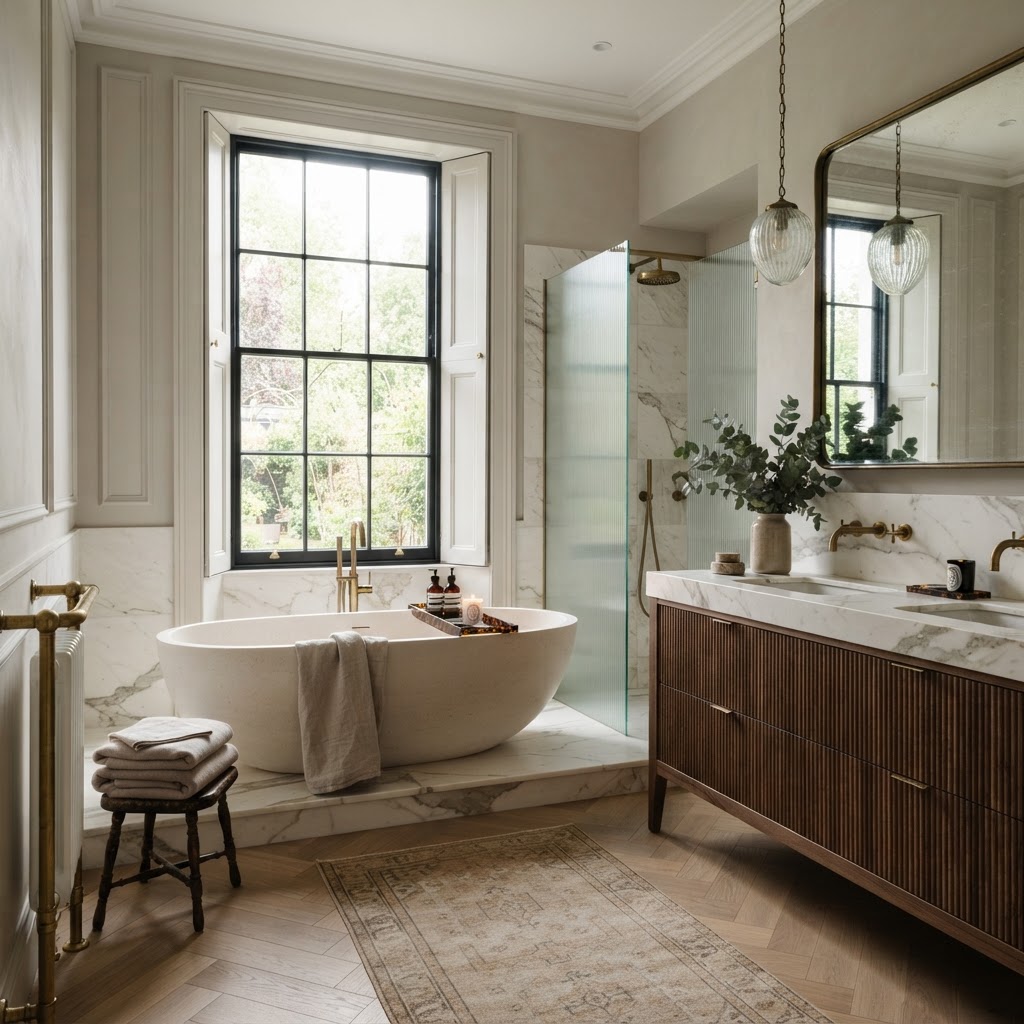
Why a Freestanding Bath Remains the Pinnacle of Bathroom Luxury
There are certain design choices that transcend trend cycles entirely. The freestanding bath is one of them. Neither a passing fad nor a nostalgic indulgence, it occupies a rare position in interior design — simultaneously timeless and deeply contemporary. In 2026, as homeowners across Gloucestershire invest more meaningfully in the spaces they inhabit, the freestanding bath has re-emerged not merely as a stylistic flourish, but as the centrepiece of a considered, holistic approach to bathroom design.
At Dajon Interiors, we work with clients from Gloucester, Cheltenham, Stroud, and across the Cotswolds who want their bathroom to feel genuinely extraordinary. Not simply clean and functional, but emotionally resonant — a room that offers sanctuary at the end of a long day and quiet beauty every morning. Few elements achieve that quite as powerfully as a beautifully chosen freestanding bath, positioned with intention and styled with care.
In this guide, we explore everything you need to know about selecting and designing around a freestanding bath: the shapes, the materials, the spatial considerations, and the design language that will make yours feel truly bespoke.
The Design Language of the Freestanding Bath
A freestanding bath makes a visual statement the moment you enter a room. Unlike a built-in or panel bath, it exists as a sculptural object in its own right — an island of calm that draws the eye and anchors the entire space. For this reason, every design decision you make around it must be considered in relation to it.
The most enduring shapes remain the slipper bath, the double-ended roll-top, and the contemporary oval or pill form. Each communicates something different. The slipper bath, with its raised back and deeply reclined silhouette, speaks to Victorian refinement reimagined for modern living. The double-ended roll-top is inherently democratic — luxurious from every angle, equally comfortable for two. The contemporary oval or asymmetric form is perhaps the most versatile: clean enough to work within a minimalist scheme, yet distinctive enough to anchor a maximalist, richly layered room.
Choosing the Right Profile for Your Space
Scale matters enormously. One of the most common mistakes in bathroom design — and one we help clients avoid every day at our bathroom showroom in Gloucestershire — is choosing a bath that is either too large for the room or too modest to command the visual weight it deserves. A freestanding bath needs breathing room. It should be possible to walk around it comfortably, and there should be sufficient negative space between the bath and the walls to allow it to read as a sculptural centrepiece rather than an oversized obstacle.
As a general principle, allow at least 300–400mm of clear space on all sides where possible. In larger bathrooms — particularly the generous principal suites found in Cotswolds farmhouses and period homes across Cheltenham — you have the freedom to go larger and bolder. In more compact spaces, a carefully scaled contemporary form in a lighter material can achieve the same emotional impact without overwhelming the room.
Materials: Where Luxury Lives in the Detail
The material from which your freestanding bath is crafted defines not only how it looks but how it feels to use, how it performs over time, and how it interacts with light throughout the day.
Cast Iron
The original freestanding bath material, cast iron remains peerless for heat retention. A cast iron bath filled with hot water will hold its temperature significantly longer than any acrylic equivalent — a genuine, tangible luxury that you experience every time you use it. Cast iron is heavy, however, and requires structural consideration during installation. For period properties across Gloucestershire, where thick stone floors and original joinery are commonplace, this is rarely a concern. For modern builds, a structural assessment is advisable.
Solid Surface and Composite Materials
In recent years, solid surface materials — including stone resin and mineral composite — have become the preferred choice for clients who want the visual weight and luxurious feel of stone without its inherent porosity or maintenance demands. These materials can be cast into virtually any form, enabling the fluid, sculptural shapes that define contemporary luxury bathroom design. They are warm to the touch, resistant to staining and chipping, and develop a subtle patina over time that only enhances their beauty.
Copper and Brushed Metals
For those seeking a truly singular aesthetic, copper freestanding baths occupy a category of their own. The warm, burnished tones of copper interact beautifully with natural light, and the material develops a living patina over time, making each bath genuinely unique. Paired with aged brass or unlacquered bronze fixtures, a copper bath creates an atmosphere of layered, artisanal luxury that feels both ancient and entirely of the moment.
Positioning and Spatial Planning
Where you place your freestanding bath within the room is as important as the bath itself. The most instinctive choice — centred beneath a window or skylight — remains the most effective for good reason. Natural light falling on a beautiful material at different times of day creates a constantly shifting visual experience that no artificial lighting scheme can fully replicate.
However, not every bathroom affords this luxury. In such cases, consider positioning the bath to face a focal point: a dramatic feature wall in natural stone, a bespoke vanity unit, or a view through glazed doors to a garden or terrace. The bath should always feel deliberately placed, never simply accommodated.
Plumbing Considerations
One practical consideration that often surprises clients is the plumbing requirement. A freestanding bath, by definition, is not against a wall — which means your water supply and waste need to be routed through the floor. This is entirely achievable in both new builds and refurbishments, but it must be planned early. Attempting to retrofit floor plumbing after tiling is complete is both costly and disruptive. At Dajon Interiors, our design process ensures these decisions are made at the outset, so your finished bathroom is as seamless as it appears.
Styling Your Freestanding Bath: Creating the Full Picture
A freestanding bath does not exist in isolation. Its power is amplified or diminished by everything around it. The fixtures you choose, the floor material beneath it, the wall treatment behind it, the lighting above it — all of these elements must speak the same design language.
For a contemporary scheme, consider pairing a sculptural oval bath in white solid surface with large-format porcelain tiles in a warm greige tone, floor-mounted minimalist taps in brushed gunmetal, and a single pendant light suspended directly above. The result is calm, considered, and genuinely luxurious without being ostentatious.
For a more classical approach — particularly appropriate in the period homes and rural retreats common across the Cotswolds — a roll-top bath in cast iron, finished in a deep inky navy or forest green on the exterior, paired with polished nickel pillar taps and a reclaimed limestone floor, creates an atmosphere of quiet grandeur that feels rooted in its setting.
Accessories matter more than many clients anticipate. A beautifully proportioned bath tray in natural oak or aged brass, a freestanding towel rail positioned at the perfect distance, a carefully chosen art piece visible from the bath — these details elevate the room from well-designed to truly memorable.
Freestanding Baths for Luxury Homes Across Gloucestershire
The homes of Gloucestershire are as varied as they are beautiful. From contemporary new builds on the outskirts of Gloucester to Georgian townhouses in Cheltenham, converted barns in the Stroud valleys, and honey-stone manor houses deep in the Cotswolds, each property presents its own spatial character and design opportunity. What unites them is an appetite for quality — a desire to invest in spaces that are built to last and designed to delight.
At Dajon Interiors, we design and install bespoke bathrooms for clients throughout Gloucestershire, tailoring every element to the specific architecture, proportions and lifestyle of each home. Our approach begins with understanding how you live — how you use your bathroom, what it means to you, what you want to feel when you step into it — and builds outward from there. A freestanding bath may be at the heart of many of these projects, but it is always part of a wider, holistic design story.
We also work closely alongside our clients on complementary spaces, from luxury kitchens to bespoke bedroom furniture, ensuring a coherent design language flows throughout the home. You can explore some of our completed projects in our portfolio.
Begin Your Freestanding Bath Project with Dajon Interiors
If you are considering a freestanding bath as part of a wider bathroom transformation, the best place to begin is a conversation. Our team of experienced designers will listen carefully to your vision, assess your space, and guide you through the full range of options — from shape and material to fixtures, lighting and finishing details.
We invite you to visit the Dajon Interiors showroom in Gloucester, where you can see, touch and experience the quality of the products we specify. For clients in Cheltenham, Stroud, across the Cotswolds and throughout Gloucestershire, we offer full design consultations and a seamless, end-to-end project management service from initial concept through to final installation.
Get in touch with Dajon Interiors today to arrange your consultation and take the first step towards a bathroom that is genuinely extraordinary.
The Freestanding Bath as an Investment in How You Live
Ultimately, the freestanding bath endures because it represents something more than good design. It is a commitment to the idea that the rituals of daily life deserve to be beautiful — that a bath taken at the end of a long week should feel like an event, a moment of genuine pleasure rather than mere practicality. In a world that moves quickly and demands constantly, that is not an indulgence. It is a necessity. And it begins with choosing the right bath, in the right space, designed by people who understand what luxury truly means.